Festival blog editor Louise Millar on Denis Johnson’s Train Dreams, the novella that fixed her writer’s block and returned her to the joy of reading
As the author of four published crime novels, to experience severe writer’s block, suddenly, in the middle of book five, felt like a nightmare.
How did it happen?
Unforeseen, traumatic family events can happen to any of us. In my case, they came all at once, leaving me both hypervigilant and foggy brained.
‘Secondary trauma’, was the diagnosis a doctor gave me, describing it like a mild PTSD.
I brushed the news aside, and returned to work. It would all be fine, I was sure. My urge to write remained strong, and if I kept going, the writer’s block would surely disappear.
But as I battled on through my fifth thriller, the plot became increasingly tangled. I felt as if I were tipping words from a dictionary onto the page and shuffling them around. They made sense, but I couldn’t feel them.
And if I couldn’t feel them, how could a reader?
Worse, I was struggling to read now, too. My eyes were skating off the page. Stephen King says, to be a writer one must ‘read a lot, and write a lot’ – and now I couldn’t do either.
So I put my tangled fifth novel away, and started a new one.
A year later, that wasn’t working either.
Later, a psychologist told me that when our brains experience trauma, they switch to survival mode, and take ‘offline’ the parts we don’t need. My imagination, it seemed, had gone ‘offline’, along with my ability to ‘feel’ words.
Abjectly, I found myself scrolling through Instagram, watching Netflix, and managing the odd audiobook – with lots of rewinds – eyeing the novels on my husband’s bedside table, envious of his ability to disappear into imaginary worlds I could no longer access.
As our family situation thankfully improved, and the fog lifted, I returned to writing short pieces about art and music, but it still felt like running through water. The only fiction I produced, whose words I could feel, was, not surprisingly, a short story about a woman fighting to regain her voice.
Then, in 2025, just before Christmas, I was telling a friend at work, who loves reading, how much I missed it.
‘Have you read Train Dreams, by Denis Johnson.’ He said, ‘It’s short – a novella.’
Truth was, Train Dreams, a story about a man working on the American railroads, sat on my bookshelf at home. I’d given up after Chapter One.
Later that day, as I was talking to another writer friend, I heard him pause mid-sentence.
‘Do you know you’re on that thing constantly?’ he asked.
I looked up and realised I’d been scrolling as he answered my question about how his own book was progressing.
‘And when you do talk,’ he continued, ‘it’s like your brain is scrolling through Instagram. It leaps about from idea to idea.’
I stood stunned. But I couldn’t argue. He was right. Something had to change.
That night, I went home and took Train Dreams off the shelf. It was 103 pages. Surely, I could manage a third of a novel.
My eyes skated off the first page, searching for my phone. I forced them back, and read on through the first chapter, then two more, battling to stay focused.
Before I knew it, I was immersed in beautiful elegiac writing about a character living in a forest scorched by fire, his memories buried in ash, watching new, green life return through the blackened ground, but now in different form.
The next morning, driving home from the gym, I felt an urge to do something. What was it? To check my phone? Then I realised it was to get back to my book.
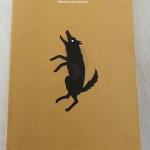
I read on through Train Dreams that day. In it, I encountered an astonishing image of an injured forest creature that I know I’ll never forget. As I read on, I began to feel a rhythm to the novella that reminded me of train stops, each one a destination in the journey of a train labourer’s life through a rapidly changing America.
Finally, I made it to p103. We talk a lot about powerful opening lines in novels. I’m not sure I’ve read a more powerful last line, than in Denis Johnson’s Train Dreams.
I shut the book. I had done it. I could do it. I was a reader again. And now I wanted more.
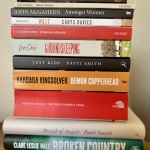
Over Christmas I gathered and bought recommendations, including another novella by Hemingway and Barbara Kingsolver’s Demon Copperhead. In the New Year, I read Foreign Affairs by Alison Lurie, and raced through the short chapters of Clare Leslie Hall’s Broken Country. Right now, I’m in the middle of Patti Smith’s The Kids.
Then a strange thing happened two weeks ago. I woke up realising I had dreamt, for the first time in years.
My brain was sending me stories again.
I found myself thinking about Broken Country, and my own fifth novel. Would cutting the tangled plot into short chapters help?
A new character jumped into my mind, as I was driving to work. An ambitious young woman who works in Whitehall, who sees something she shouldn’t on the way to an interview.
I found the last draft of my fifth novel on my laptop, and cut in half the first chapter, about a woman who lives alone in rural Scotland. It suddenly felt more punchy. I inserted a new Chapter Two, set in London, introducing my new character. My brain began to chug along, then speed up, as it went to work connecting the two women and their locations.
If writer’s and reader’s block was just a stop on my own life journey, then I’m hoping that Denis Johnson’s Train Dreams has sent me onwards again.